
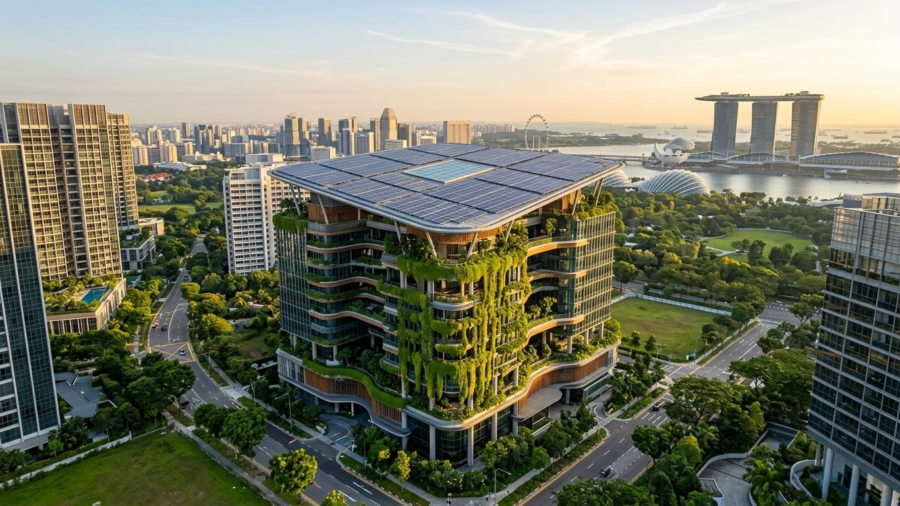
Artificial intelligence (AI) is transforming the way cities operate, and Singapore is leading the way in using advanced technology to create smarter, more sustainable urban environments. From intelligent transportation systems and automated public services to smart buildings and AI-powered urban planning, Singapore is embracing innovation to improve everyday life.
As one of the world’s most technologically advanced countries, Singapore has developed an ambitious vision to become a leading Smart Nation. By combining artificial intelligence, data analytics, automation, and digital infrastructure, the country is finding new ways to address urban challenges and improve the quality of life for its residents.
But how exactly is Singapore using AI to build smarter cities? And what makes its approach different from other countries?
Let’s explore the key technologies, government initiatives, and innovations shaping Singapore’s smart city future.
1. Smart Nation: Singapore’s Vision for an AI-Powered Future
Singapore’s Smart Nation initiative is one of the most important foundations of its digital transformation journey.
The initiative focuses on using technology to improve public services, strengthen infrastructure, support businesses, and create a more connected society.
Artificial intelligence plays an increasingly important role in achieving these goals. By analysing large amounts of data, AI systems can help government agencies understand urban challenges, predict future needs, and make better decisions.
Singapore’s National AI Strategy 2.0, introduced in December 2023 and updated in May 2026, strengthens the country’s commitment to developing and adopting AI across different industries.
The strategy focuses on developing AI talent, improving research capabilities, strengthening infrastructure, and creating a trusted environment for responsible AI adoption.
Through these efforts, Singapore is building a foundation where artificial intelligence can support everything from transportation and healthcare to urban development and government services.
2. AI Is Making Singapore’s Transportation Systems Smarter
Transportation is one of the biggest challenges facing modern cities. Traffic congestion, growing populations, and increasing demand for public transportation require smarter solutions.
Singapore is using AI and data analytics to improve how people and goods move around the city.
AI-powered systems can analyse traffic patterns, identify transportation demand, and support better planning decisions.
These technologies help transportation authorities understand where congestion may occur and how infrastructure can be improved.
Singapore is also progressively introducing autonomous vehicle technology.
For example, Punggol has introduced autonomous shuttle services that connect residents with important neighbourhood destinations and transport facilities.
These vehicles use sensors, cameras, and intelligent navigation systems to understand their surroundings and move along designated routes.
AI is also being explored to improve public transport planning, optimise logistics operations, and support the development of electric vehicle charging infrastructure.
By combining intelligent transportation with real-time data, Singapore is working towards a more efficient and convenient urban mobility system.
3. AI-Powered Urban Planning and Smart Infrastructure
Building a smarter city requires careful planning and efficient management of limited resources.
Singapore’s Urban Redevelopment Authority (URA) is exploring how artificial intelligence can improve urban planning and city development.
AI and machine learning can analyse complex datasets, recognise patterns, and help planners understand how urban environments may change over time.
These technologies support decisions involving land use, transportation, infrastructure, population growth, and public facilities.
One important development is the use of digital twins.
A digital twin is a virtual representation of a physical building, infrastructure system, or urban environment. It allows planners and operators to monitor conditions, test scenarios, and identify potential problems before making real-world changes.
At Punggol Digital District, Singapore’s Open Digital Platform connects building systems, sensors, and Internet of Things (IoT) devices.
The platform also supports a 3D digital twin, allowing operators to monitor district systems and use AI-powered recommendations to improve building operations.
This approach helps Singapore develop smarter infrastructure while making better use of available resources.
4. Smart Buildings and AI-Powered Energy Management
Buildings consume significant amounts of energy, particularly in cities with high temperatures and extensive air-conditioning requirements.
Singapore is using smart technologies and AI to improve building efficiency and reduce unnecessary energy consumption.
AI-powered building management systems can analyse information from sensors, temperature controls, lighting systems, and other connected devices.
Based on this information, these systems can recommend or automate adjustments to improve energy efficiency.
For example, smart building platforms can optimise cooling systems based on building conditions and energy demand.
Singapore’s Open Digital Platform at Punggol Digital District demonstrates how connected building systems can support more efficient operations.
The platform integrates information from different systems and uses intelligent recommendations to optimise equipment such as cooling towers and lifts.
These innovations can help reduce operational costs, improve building performance, and support Singapore’s wider sustainability objectives.
5. AI Is Helping Singapore Build a More Sustainable City
Sustainability is an important part of Singapore’s smart city vision.
As a densely populated urban country with limited natural resources, Singapore must find innovative ways to manage energy, water, waste, and environmental challenges.
Artificial intelligence provides useful tools for monitoring environmental conditions and improving resource management.
AI-powered systems can analyse data from environmental sensors, identify unusual patterns, and help authorities make more informed decisions.
For example, smart water meters allow households and businesses to monitor their water consumption more effectively.
Environmental modelling tools can also help urban planners understand how buildings and developments influence local conditions such as temperature, wind, sunlight, and noise.
These insights can support better urban designs and more comfortable living environments.
Singapore’s Green Plan 2030 also provides a broader framework for combining sustainability with technological innovation.
By integrating AI into environmental management, Singapore is working towards a greener, more resource-efficient urban future.
6. AI Is Improving Public Services and Everyday Life
A smart city is not only about advanced buildings and transportation systems. It is also about making everyday services more convenient for residents.
Singapore is using AI and data analytics to improve how government agencies communicate with citizens and deliver public services.
AI-powered chatbots can answer common questions, provide information, and help residents access government services without waiting for traditional customer support.
Government agencies also use data analytics to understand public needs and improve service delivery.
For example, population and household data can support housing supply planning, while healthcare utilisation data can help agencies estimate future resource requirements.
These applications allow government organisations to make more informed decisions and respond more effectively to changing public needs.
AI can also support accessibility.
Geospatial technologies can help people identify wheelchair-friendly routes by highlighting features such as ramps, lifts, and accessible pathways.
This demonstrates how digital innovation can make urban environments more inclusive.
7. Smart Healthcare and AI-Powered Medical Innovation
Healthcare is another area where AI can contribute to smarter cities.
As Singapore’s population ages, the demand for accessible and efficient healthcare services is increasing.
Artificial intelligence can help healthcare organisations analyse medical information, support clinical decision-making, and improve the management of healthcare resources.
AI-powered medical imaging tools can assist healthcare professionals in identifying potential abnormalities and prioritising cases for further assessment.
Predictive analytics can also help healthcare providers understand population health trends and plan services more effectively.
Singapore’s National AI Missions include healthcare as one of four priority areas, alongside advanced manufacturing, connectivity, and financial services.
The goal is to encourage collaboration between government agencies, researchers, and businesses to develop AI solutions that address real-world challenges.
Although AI cannot replace medical professionals, it can support healthcare workers and help improve the efficiency of healthcare delivery.
8. The Role of 5G, IoT, and Big Data in Singapore’s Smart City Development
Artificial intelligence does not work alone.
For smart cities to operate effectively, AI needs access to reliable data, connected devices, and strong digital infrastructure.
Three important technologies supporting Singapore’s smart city development are 5G, the Internet of Things (IoT), and big data analytics.
5G Networks
5G provides fast and reliable connectivity that supports connected devices, intelligent transportation, automation, and real-time communication.
Internet of Things (IoT)
IoT devices include sensors, cameras, meters, and connected equipment that collect information from the physical environment.
These devices help monitor traffic, building conditions, energy consumption, and other urban activities.
Big Data Analytics
Big data analytics allows organisations to process large datasets and identify patterns that support better decisions.
When combined with AI, these technologies can help cities become more responsive, efficient, and sustainable.
Singapore’s investment in digital infrastructure creates opportunities to integrate these technologies into different parts of its urban environment.
9. Challenges Singapore Must Address in Building AI-Powered Cities
Although artificial intelligence offers significant opportunities, developing smarter cities also comes with challenges.
Singapore must address several important issues to ensure that AI technologies deliver meaningful benefits.
Data Privacy and Security
Smart cities collect information from many connected devices and digital services. Protecting personal information and preventing unauthorised access are essential.
Cybersecurity Risks
As cities become increasingly connected, digital infrastructure may face more sophisticated cyber threats. Strong cybersecurity systems are necessary to protect critical services.
Responsible AI Development
AI systems must be transparent, reliable, and properly managed. Decisions involving public services should include appropriate human oversight.
Digital Inclusion
Not everyone has the same level of access to technology or digital skills. Singapore must ensure that older residents and less digitally experienced communities can benefit from smart city innovations.
Infrastructure and Implementation Costs
Developing AI-powered infrastructure requires investment in technology, maintenance, skilled professionals, and cybersecurity.
Addressing these challenges will help Singapore build a smart city that is not only technologically advanced but also safe, inclusive, and trustworthy.
10. The Future of AI and Smart Cities in Singapore
Singapore’s smart city journey is continuing to evolve as new artificial intelligence technologies become available.
The next generation of urban innovation may involve more advanced autonomous transportation, intelligent energy systems, AI-powered urban simulations, and automated infrastructure management.
Singapore’s National AI Missions are also creating opportunities to test and develop solutions in real-world environments.
The country’s approach is increasingly focused on moving beyond isolated technology projects towards connected systems that can work together.
For example, transportation data could support better infrastructure planning, while building management systems could use real-time information to improve energy consumption.
AI could also help urban planners evaluate how future developments may affect traffic, environmental conditions, and the availability of public services.
These developments could make Singapore’s urban environment more adaptive and resilient.
As artificial intelligence continues to advance, Singapore has the opportunity to become an important global example of how technology can improve city living.
Conclusion
Singapore is using artificial intelligence to transform the way cities are planned, managed, and experienced.
From smarter transportation and AI-powered urban planning to sustainable buildings, intelligent public services, and digital healthcare, the country is demonstrating how technology can address real urban challenges.
Its Smart Nation vision, National AI Strategy, and investments in digital infrastructure are creating a strong foundation for future innovation.
However, building a smarter city is not simply about adopting advanced technology. It is about using innovation responsibly to improve people’s lives, protect the environment, and create better opportunities for future generations.
As AI continues to reshape the world, Singapore is positioning itself at the forefront of smart city development in Asia.
The country’s journey shows that the future of urban living will depend not only on how advanced technology becomes, but also on how effectively it serves people and communities.
Add a Comment